Home Court Advantage Pays Dividends for Buducnost
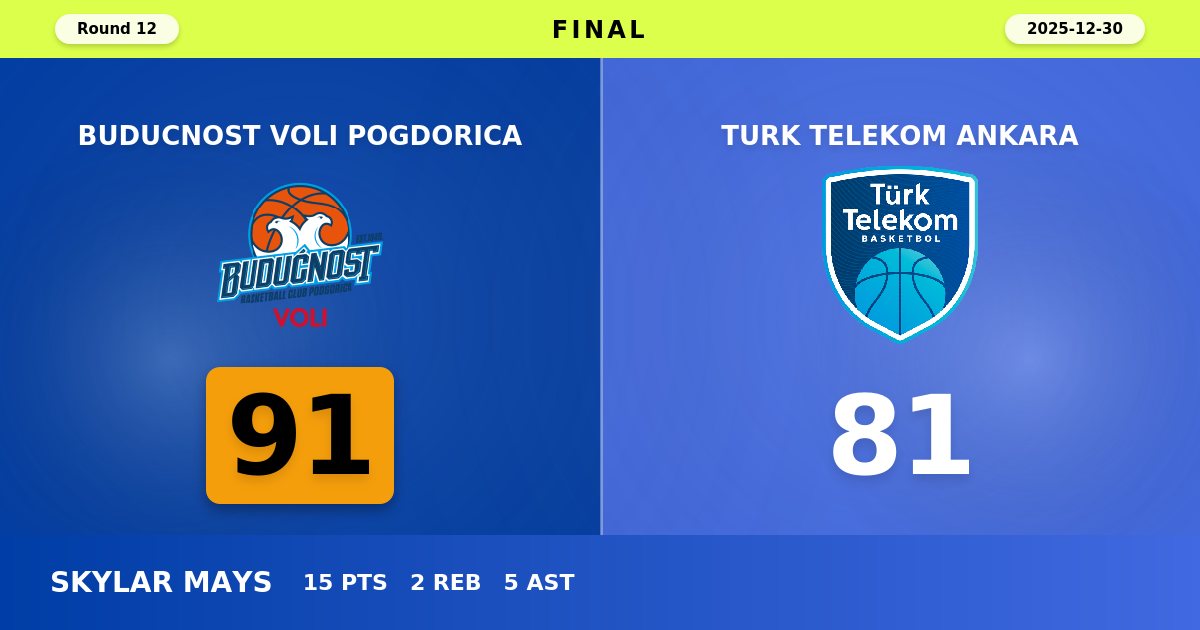
Buducnost VOLI Pogdorica delivered an impressive performance on their home floor, defeating Turk Telekom Ankara 91-81 in a Round 12 EuroCup encounter that saw 3,850 passionate fans pack the arena in Podgorica. The victory was particularly sweet for the Montenegrin side, who bounced back from a heartbreaking one-point loss to Dolomiti Energia Trento just two weeks prior. This win demonstrates Buducnost's resilience and their determination to maintain a strong position in the EuroCup standings as the season progresses.
The game unfolded as a tale of two halves, with Turk Telekom Ankara initially showing their offensive prowess in the opening quarter, taking a 23-20 lead. However, Buducnost VOLI Pogdorica gradually seized control of the contest, establishing their rhythm and defensive intensity. The home team's ability to maintain composure and execute their game plan proved decisive, particularly in the crucial fourth quarter when they outscored their Turkish opponents 27-19 to seal the ten-point victory.
Sulaimon and Tanaskovic Lead Buducnost's Offensive Charge
The standout performer for Buducnost VOLI Pogdorica was undoubtedly Rasheed Sulaimon, who put on an offensive clinic with a game-high 25 points. The American guard was remarkably efficient, converting 10 of his 15 field goal attempts, including an impressive 5-of-8 performance from beyond the three-point arc. Sulaimon's ability to create his own shot and knock down contested jumpers kept the Turkish defense on their heels throughout the contest. His plus-8 rating reflected his overall impact on the game, as he consistently made winning plays on both ends of the floor.
Complementing Sulaimon's scoring outburst was Nikola Tanaskovic, who registered a double-double with 17 points and 13 rebounds. The Serbian forward was a force in the paint, grabbing five offensive rebounds that led to crucial second-chance opportunities for his team. Tanaskovic's efficiency rating of 23 was among the highest on the court, and his plus-10 rating demonstrated his significant contribution to the victory. His ability to dominate the glass and convert at a high percentage (6-of-9 from the field) provided Buducnost with a reliable interior presence that Turk Telekom struggled to contain.
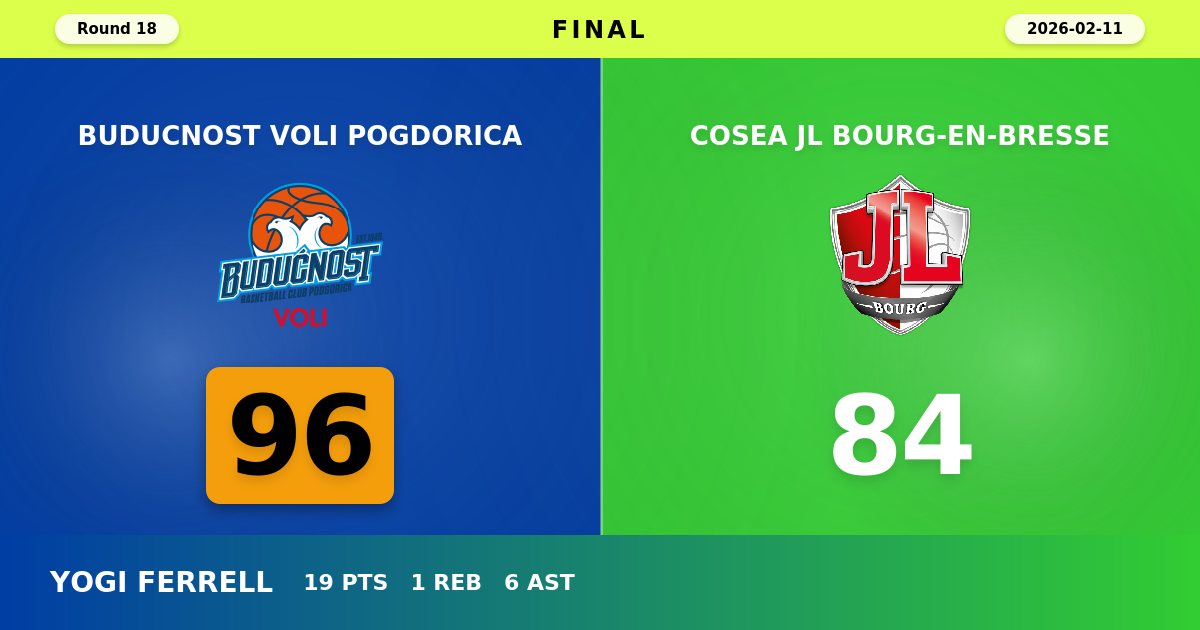
Yogi Ferrell also made important contributions with 16 points, four rebounds, and three assists. The diminutive point guard's perfect 6-of-6 performance from the free-throw line proved crucial in the closing stages of the game, as he helped ice the victory when the Turkish side threatened to mount a comeback. Skylar Mays provided valuable scoring off the bench with 15 points, posting an outstanding efficiency rating of 24. His intelligent play and clutch shooting gave Buducnost a spark when the starters needed rest.
Turk Telekom's Offensive Struggles Prove Costly
Turk Telekom Ankara entered the game with momentum, having recently dominated ratiopharm ulm 87-53 just weeks earlier. However, they couldn't replicate that offensive efficiency against a disciplined Buducnost defense. The Turkish side's offensive execution deteriorated as the game progressed, particularly in the third quarter when they managed just 18 points. This scoring drought allowed the home team to build a comfortable cushion that proved insurmountable in the final period.
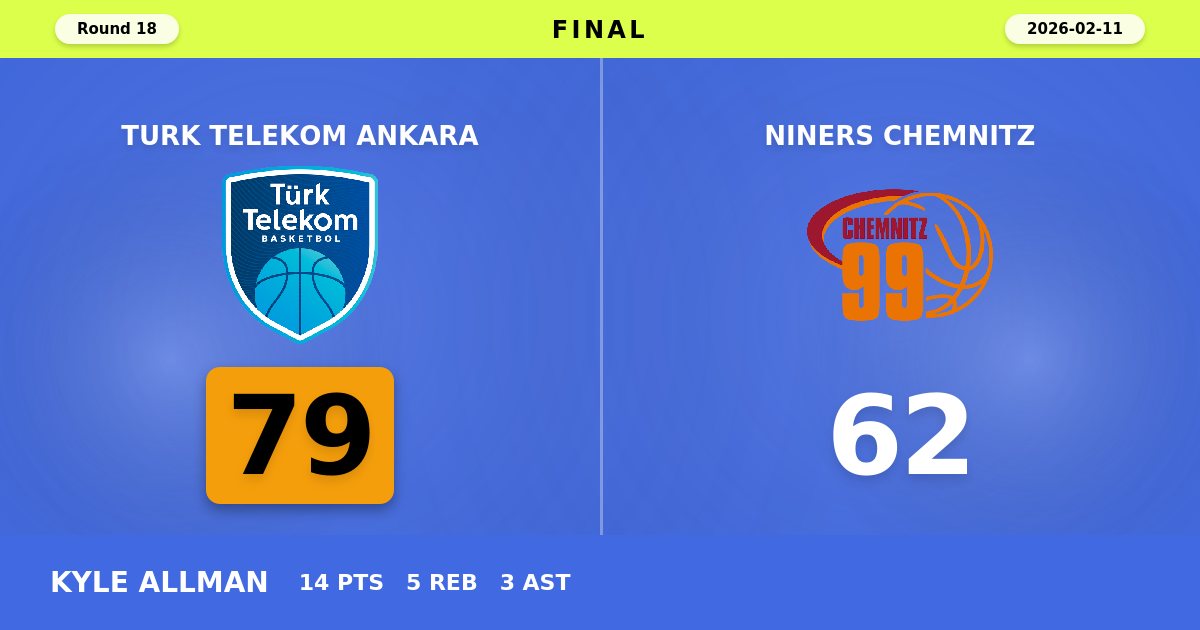
Jaleen Smith led Turk Telekom in scoring with 18 points, connecting on 6-of-11 attempts from three-point range. The American guard's long-range marksmanship kept his team within striking distance, but he received insufficient support from his teammates. Kyle Allman contributed 17 points and eight free throw attempts, demonstrating his ability to get to the line, but his efficiency suffered as he committed three turnovers and struggled with his overall shooting percentage.
Dogus Ozdemiroglu added 12 points and five assists for the visitors, but his minus-12 rating highlighted the team's struggles when he was on the court. The Turkish guard was efficient inside the arc, converting 5-of-6 two-point attempts, but Turk Telekom needed more production from their perimeter shooters to keep pace with Buducnost's balanced attack. Michael Jaden Devoe and Marko Simonovic combined for just 11 points, falling short of the offensive output required to challenge the home team effectively.
Defensive Intensity Defines the Contest
The game was characterized by physical, intense defense from both sides, with neither team willing to concede easy baskets. Buducnost VOLI Pogdorica forced 14 turnovers while committing only 10 themselves, demonstrating superior ball security and defensive pressure. The home team's ability to convert these turnovers into transition opportunities proved crucial in building and maintaining their lead throughout the second half.
Jerry Boutsiele anchored Buducnost's interior defense with two blocked shots, altering numerous other attempts around the rim. His presence discouraged Turk Telekom from attacking the paint with the same aggression they had shown in previous games. The French big man's defensive contributions may not appear overwhelming in the box score, but his rim protection was invaluable in limiting the visitors' scoring opportunities in the crucial moments.
Turk Telekom struggled with their three-point shooting, converting just 10-of-27 attempts (37 percent). While this percentage might seem respectable, they needed to be more efficient from distance to compensate for Buducnost's dominance in the paint and on the boards. The Turkish side was outrebounded 37-24, with Buducnost grabbing 11 offensive rebounds compared to just seven for the visitors. This disparity in second-chance opportunities proved decisive in determining the final outcome.
Bench Production Makes the Difference
One of the key factors in Buducnost VOLI Pogdorica's victory was the significant contribution from their bench players. Skylar Mays, Fletcher Magee, Axel Bouteille, and James Thompson combined for 25 points, providing essential scoring when the starters needed rest. This depth allowed head coach to maintain defensive intensity and offensive flow throughout all four quarters without experiencing significant drop-offs in production.
Skylar Mays was particularly impressive, posting an efficiency rating of 24 with his 15 points, five assists, and two steals. His ability to orchestrate the offense and create opportunities for his teammates provided Buducnost with a secondary playmaker who could initiate sets and break down the Turkish defense. Axel Bouteille also made an impact with eight points on perfect 3-of-3 shooting, including two three-pointers that stretched Turk Telekom's defense.
In contrast, Turk Telekom Ankara's bench struggled to provide consistent offensive support. Kris Bankston led the reserves with nine points and was efficient with a perfect 4-of-4 shooting performance from two-point range, but the remaining bench players contributed minimally. Uros Trifunovic added six points with two three-pointers, but the lack of sustained bench production placed excessive pressure on the starters to carry the offensive load for extended stretches.
Quarter-by-Quarter Breakdown Reveals Buducnost's Growing Dominance
The first quarter saw Turk Telekom Ankara edge ahead 23-20, showcasing their offensive capabilities and suggesting a closely contested battle ahead. Their ball movement and perimeter shooting initially troubled the Buducnost defense, creating open looks and high-percentage opportunities. However, this early advantage proved short-lived as the home team adjusted their defensive schemes and began to assert their physical presence.
The second quarter witnessed Buducnost VOLI Pogdorica outscoring their opponents 24-21, taking a 44-44 tie into halftime. This period featured increased intensity from both sides, with neither team able to create significant separation. The tactical adjustments made by Buducnost's coaching staff began to bear fruit as they started exploiting mismatches in the post and attacking the offensive glass more aggressively.
The third quarter proved pivotal, with Buducnost holding a 20-18 advantage to take a 64-62 lead entering the final period. While the margin remained close, the momentum had decisively shifted toward the home team. Their defensive adjustments limited Turk Telekom's three-point attempts and forced them into contested mid-range jumpers, disrupting the rhythm that had carried them through the opening quarter.
The fourth quarter belonged entirely to Buducnost VOLI Pogdorica, who dominated 27-19 to seal the ten-point victory. Rasheed Sulaimon and Yogi Ferrell controlled the tempo, making clutch shots and free throws when Turk Telekom attempted to rally. The home crowd's energy reached fever pitch during this final period, providing additional motivation for the Montenegrin side to close out the game with authority.
Implications for EuroCup Standings and Future Prospects
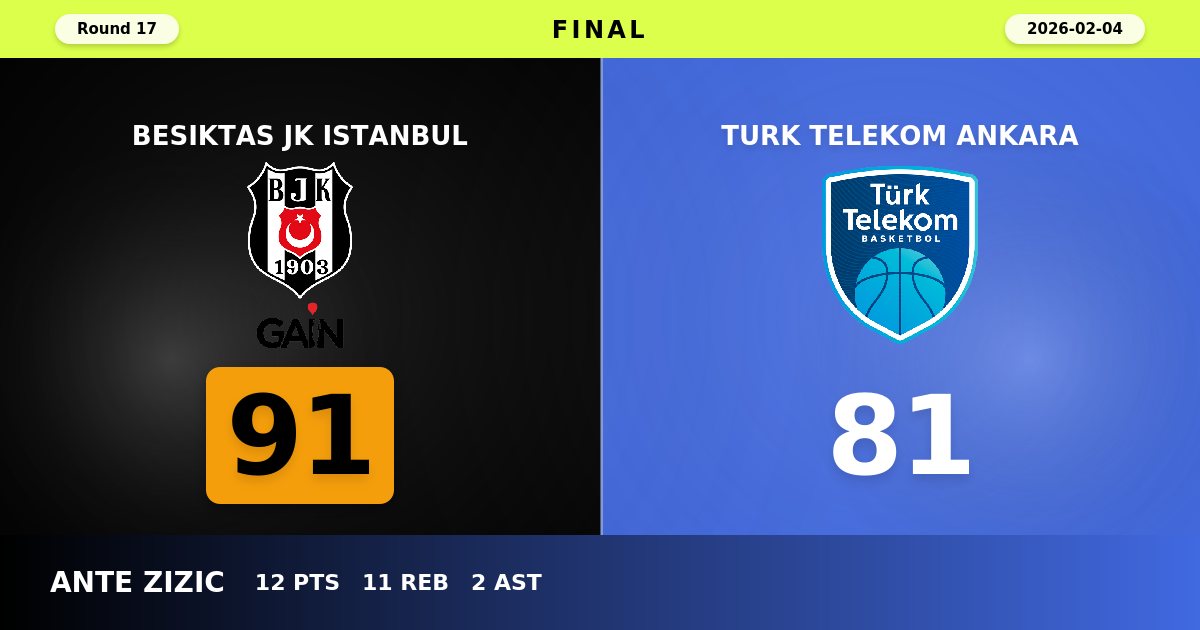
This victory improves Buducnost VOLI Pogdorica's position in the EuroCup standings and demonstrates their capability to compete with quality opponents on their home floor. Having previously secured impressive wins against ratiopharm ulm, NINERS Chemnitz, Besiktas JK Istanbul, and Lietkabelis Panevezys, they continue to build momentum as the season reaches its crucial midpoint. The team's ability to bounce back from tough losses, such as the one-point defeat to Dolomiti Energia Trento, speaks to their mental toughness and championship potential.
For Turk Telekom Ankara, this defeat represents a setback in their European campaign. Having recently suffered a narrow loss to Cosea JL Bourg-en-Bresse, they now face the challenge of regrouping and rediscovering the form that saw them dominate teams like ratiopharm ulm and Lietkabelis Panevezys earlier in the season. The coaching staff must address their rebounding deficiencies and find ways to generate more consistent offensive production from their bench if they hope to achieve their EuroCup aspirations.
As the EuroCup season progresses toward its decisive phase, both teams will need to learn from this encounter. Buducnost VOLI Pogdorica has proven they possess the talent, depth, and home-court advantage necessary to challenge any opponent, while Turk Telekom Ankara must regroup and refocus on the fundamentals that brought them success earlier in the campaign. The 91-81 final score accurately reflected Buducnost's superior execution when it mattered most.